How to Make Projects Fit the Budget: The Production Intelligence Journey
Production Intelligence means adapting the whole production approach to a fixed budget and a specific creative brief.
 By Mariana Sierra Published Feb 29, 2024 Updated Jun 14, 2025 5 min read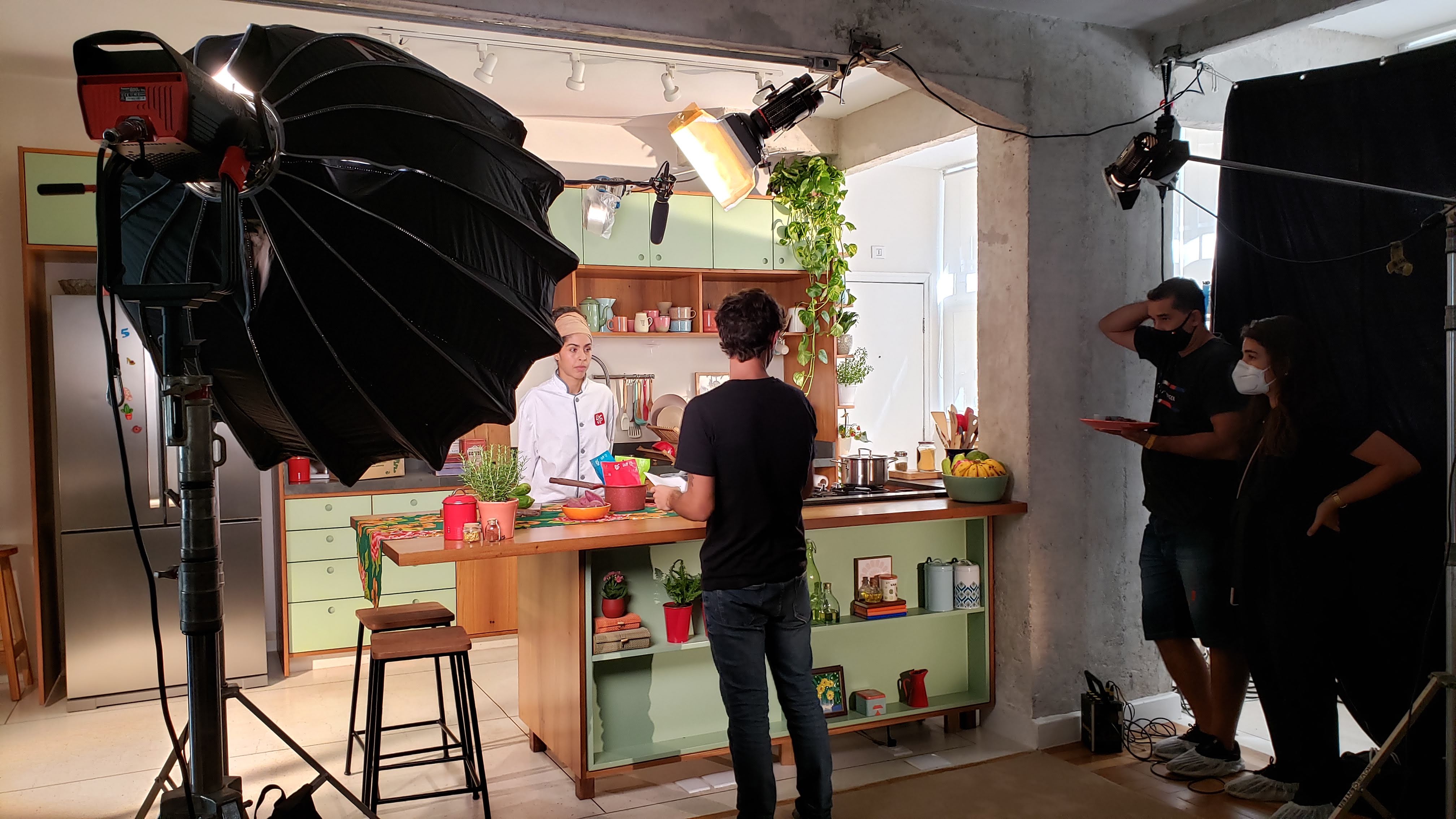
>>In a hurry?
In this post, I share my experience dealing with budgets in film and video production, showing how the cost of the same project can vary enormously depending on creative choices. Using the example of a character in a candy store, I explain that production intelligence means adapting the client's vision to the available budget, looking for alternatives that keep the essence of the story without compromising quality. My career taught me that real intelligence lies in creativity and collaboration, which make the process more efficient and more impactful. I wrap up by encouraging clients to be open about their budgets, because that can lead to innovative solutions and a production that truly resonates with the audience, whatever it costs.
It's just another day at the production company. The client has a video project in mind and starts listing everything that matters to make their vision come true. When they get the bid: shock. The budget they have is much (much) smaller than that. The production company will probably never be called again for any of that client's projects. Time is short and nobody has time to negotiate, especially when the number is so far from reality. But what is reality?
Whenever I meet a new client and we start talking about what they want to produce, I tell them that in film production the same project can cost R$10,000 or R$1 million (roughly US$2,000 or US$200,000). And I don't mean that as a figure of speech.
Picture a sad character walking into a candy store. He picks up a bag of candy and suddenly we see that his life has become more interesting. He's working with more energy, he's exercising, he's cooking, he's flirting with someone in the park while walking his little dog. We cut back to the store, the character decides to buy the candy and sees that same crush paying at the register with the very same candy. They both smile.
If it's shot in a more documentary style, with a real person who isn't paid a talent fee, a neighborhood candy shop, all the other scenes at the person's home and around it, and the person he meets is his real-life partner, it costs infinitely less than if I build a super whimsical set on a soundstage, with visual effects, actors, and a color palette that shifts through the objects.
It's an extreme example. Usually the client will say whether they're thinking of a documentary approach or a whimsical one, and even within a documentary style we can go from a simpler scope to a more robust one, with costs varying a lot, the same way it does with the whimsical approach. But the point here is that when someone tells a story, everyone watches a different film in their own head.
That's the context in which we talk about Production Intelligence. This Intelligence means adapting the whole production approach to a fixed budget and a specific creative brief. In the candy store example, instead of building the store on a stage, we could suggest going to a real location and dressing just a small part of it to cut costs. Drop the little dog, reduce the number of "new life" situations; in short, think about what can be changed so that the story and the core message stay the same, but production costs come down enough to fit the budget.
This way of thinking started taking shape for me after experiencing different sides of film production and their shared needs.
When I started out as an account manager, my goal was to close the deal, because I needed the commission to top up my base salary. A client not having enough to pay for the project the way we'd imagined it was terrible. I wasn't thinking about the reel or about profit; I was focused on my relationship with that client and on my commission, which was a fixed percentage of billings. I was young and thought the more projects, the better.
Then I moved on to producing the projects. The budget was already locked, I had to deliver what had been promised, and sometimes that was almost impossible, because whoever had put the bid together had no idea what it would take to make the project happen. Still, if you have to deliver at that cost, you have to find alternatives to the most expensive things one way or another.
Later, as a video buyer on the client side, I had to help the company make things happen with its own budget. Talking to many different vendors and seeing their production styles, and the alternatives each one offered to cut costs, added even more to my toolkit.
More recently, as an in-house video creative, I had to make the most of my budget and create projects that moved the business, so just cutting costs wasn't enough. I needed to know what was and wasn't worth cutting in order to keep the project's impact.
This journey taught me that real intelligence in film production isn't about spending more, but about thinking more creatively and strategically. From the days when I was just an account manager, driven by the relentless pursuit of closing deals, to the moments when I found myself as a creative, trying to make every cent of a budget count, I learned that the key to success is open communication and honest collaboration.
I once had the opportunity to work with a client where this process played out perfectly.
They had a brand ambassador and three product attributes they wanted to highlight. They shared their maximum budget for producing a few different videos, reasoning that, since their communication happened mostly on social media, putting out more messages with different images was better than putting out the same image over and over.
We landed on a simple but elegant format that prioritized fitting as many scripts as possible into the shoot day, with quick wardrobe changes and fixed lighting. The scripts were written around the production plan I designed for the available budget and the ambassador's schedule. We even got some posed photos for extra posts, on top of the attribute videos originally planned and a brand video.
A super streamlined production, but high quality, and one that served the strategy at that moment. That was only possible because we knew the budget and what mattered most in the strategy.
Sometimes it's hard to convince clients to open up that much. They think we'll charge more if we know how much they have to spend, or they feel embarrassed for having much less than our initial proposal asked for, or they don't think knowing the goal of the video really affects the production, which they assume is something much more mechanical. The truth is that film production is a collaborative process by nature, and if the collaborators don't have the essential information, they can't suggest the best way to make it happen, even if, at the beginning, the collaboration is only between an account manager and a client.
If you believe the production company you're getting a bid from has the necessary experience and is willing to work out formats together with you, trust them with some information. You might be able to do even more, or do it with even better quality, with a budget that at first seemed insufficient.
Imagine a world where the value of a story isn't measured by the price paid to tell it, but by how deeply it resonates with each viewer. It's in this universe of possibilities that film production becomes a true art of adaptation, where every budget, however small, can bring a unique and powerful story to life.
Shall we?
Want personalized help? Get in touch and let's talk!
Comments
Gataria❤️
Lindíssimo texto... me enquadro em cada frase... Parabéns...
Muito bom! Que clareza na forma de enxergar produção e criação! 😀
Assino embaixo. Quanto mais informação e clareza, melhor o planejamento e a entrega. Admiro a tua trajetória Mari querida. Ahazouuuuu